2026-09-11 · 5 min read · Las Vegas
Should You Take the Las Vegas Grass Rebate? What It Pays and What It Does to Your Resale
The short version
If you own a home in the Las Vegas valley you have heard something about grass removal, water rebates, or a “useless grass” law, and you are probably not sure how much of it applies to you.
Two separate things are happening. Money you can get for converting your grass, and a rule that affects certain properties. Most of the confusion comes from people mixing them up.
There is also a third question, which is what a conversion does to your house when you sell it. That is the part I can help with, and it is the part the rebate page cannot.
The money: the Water Smart Landscapes rebate
The Southern Nevada Water Authority will pay you to replace living grass with water-efficient desert landscaping. It is voluntary and it is one of the most generous programs of its kind in the country.
As of now, homeowners receive $5 per square foot of grass removed for the first 10,000 square feet converted, and $2.50 per square foot beyond that, calculated per property each fiscal year, July 1 through June 30. Businesses, HOAs and multifamily properties have their own rate structure.
There are bonuses on top. An extra $100 for each new tree planted as part of the conversion, and some local agencies, including the Las Vegas Valley Water District and the City of Henderson, layer additional incentives on top of the SNWA base. Because the total depends on which agency serves your address, confirm the current number for your specific home.
One detail that catches people. You generally need to apply and be approved before you remove any grass. Convert first and apply later and you can disqualify yourself entirely. Plan before the shovels come out.
Current rates and the application: SNWA Water Smart Landscapes Rebate.
The rule: the nonfunctional turf ban (AB356)
This is the part that gets misunderstood most.
In 2021 Nevada passed a law banning the use of Colorado River water to irrigate “nonfunctional” grass. Decorative turf along streets, sidewalks, parking lots, building frontages and HOA common areas. The compliance deadline is January 1, 2027.
Here is the part most homeowners are looking for:
This law does not require existing single-family homeowners to remove the grass in their own front or back yards.
The mandate targets commercial properties, multifamily buildings, government sites and HOA common areas. Not your private lawn. You are invited to convert, and paid to, but not forced.
The stricter rules are on new construction. New residential developments in the valley are no longer permitted to install irrigated grass in front and back yards at all.
The official summary is on the SNWA Laws and Ordinances page, and the City of Henderson publishes its own specifics.
What it does to your resale, which is the part I can actually speak to
SNWA can explain the rebate better than I can. What they cannot tell you is what happens when you list.
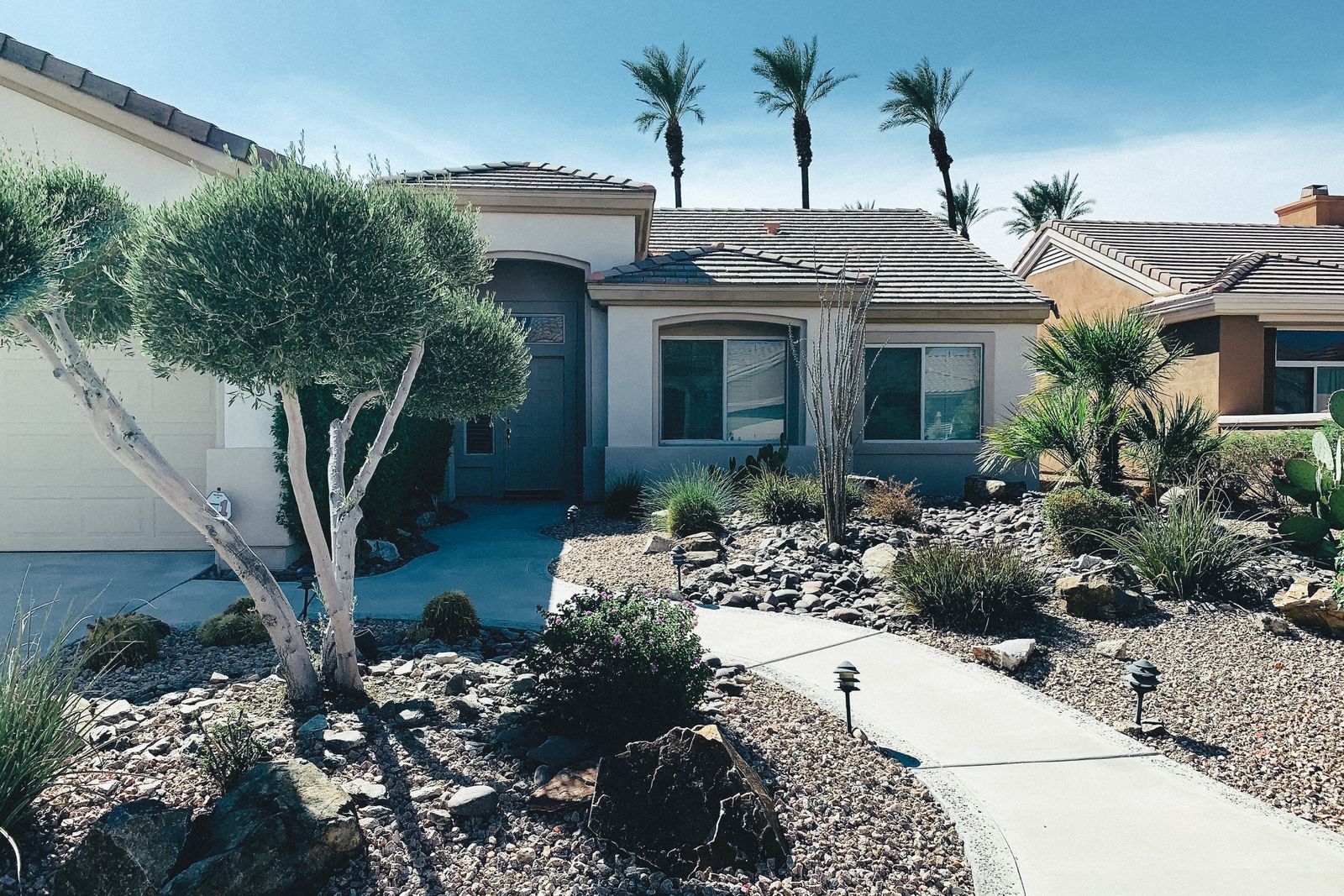
Done well, it helps. Thoughtful desert landscaping reads as cared-for and low-maintenance, and both of those are things valley buyers actively want. A buyer walking up to a well-designed desert yard sees one less thing to deal with. Add the lower water bill, which is a real monthly number a buyer can picture.
Done cheaply, it hurts, and it hurts more than the grass did. I have walked up to plenty of conversions that were a field of rock with three plants in it and a drip line running across the surface. That is not low-maintenance, it is unfinished, and buyers price unfinished harshly. It reads as a corner that got cut, and it makes them wonder where else you cut one.
The difference between those two outcomes is design and plant density, not budget. Varied rock, a real plan, enough plants and trees to give the yard shape. The tree bonus is worth taking specifically because trees are what keep a desert yard from looking like a parking lot.
And be careful about timing. If you are listing within the next few months, this is usually the wrong project to start.
Approval takes time. A yard mid-conversion is the single worst thing to photograph, and your listing photos are shot before day one, not after. New plantings look thin for a while and need time to fill in. If you want the conversion working for you in your listing photos, you want it finished with a season behind it, not finished the week before.
If you are one to two years out, that is a good time to do it. If you are two months out, do not.
What this means for you
For most homeowners, converting is a choice, not a mandate. It can put real money back in your pocket, lower your water bill, cut your maintenance, and if it is designed properly it can help you when you sell.
Two reminders. Rebate amounts and terms change. And if you live in an HOA, your community may have its own landscaping requirements on top of county rules, so check before you plan anything.
If you are thinking about it
If selling is anywhere in your next couple of years, call me before you start. 702-881-6562 or JArendt658@gmail.com.
Tell me your neighborhood and roughly when you might sell. I will tell you whether a conversion is likely to help or hurt your specific house, what it should look like to work in listing photos, and whether the timing makes sense given when you want to be on the market.
If the answer is that you should leave the grass alone, I will tell you that too.
John Arendt, Realtor, has sold homes across the Las Vegas valley for 20 years, in Henderson, Summerlin, Southern Highlands, Anthem, Boulder City and North Las Vegas.
Rebate figures and deadlines reflect current Southern Nevada Water Authority information at the time of writing and are subject to change. Confirm details with SNWA, your local water agency and your HOA before starting a project.